

Having experienced this type of crime myself, i know first–hand how traumatizing and quite literally, dibilitating an event like this is. For me, the last thing my battered and bruised body wanted to do, or my broken mindset and spirit was capable of was, communicating with anyone nor seeing anyone. BUT, i can’t STRESS this enough, WHEN, and only when it’s SAFE for you to do-so, YOU MUST, or someone you trust MUST, IMMIDETIATELY CONTACT the POLICE (999). I know for some it will be the last thing they want to do, but this is to PROTECT you, to PROTECT your LIFE, and quite possibly, OTHER potential victims.
Ohhhh my dear friends…where to begin. Being the victim/survivor of sexual violence is a life–changing event, and then, what comes after is no easy journey for us. The countless questions by the authorities, and the deep–probing into your life, can at times, be re–traumatizing. Sometimes i just couldn’t deal with it and locked myself away, but i soon recognised that this could be detrimental to my case. I needed to engage with the police and other authorities in order to bring the perpertrator to justice, if not, he would be free to rain terror on other potential victims. So, it wasn’t just a case of me reporting it just to protect myself, i did it so that no other man or woman would suffer at this MONSTERS hands again. Don’t get me wrong, there were many, many times that i felt like giving up, there were times were the FEAR was just too overwhelming it would cripple me. But then i thought of my daughther and what i would want her to do if this happened to her, and that would be to report it to the police.
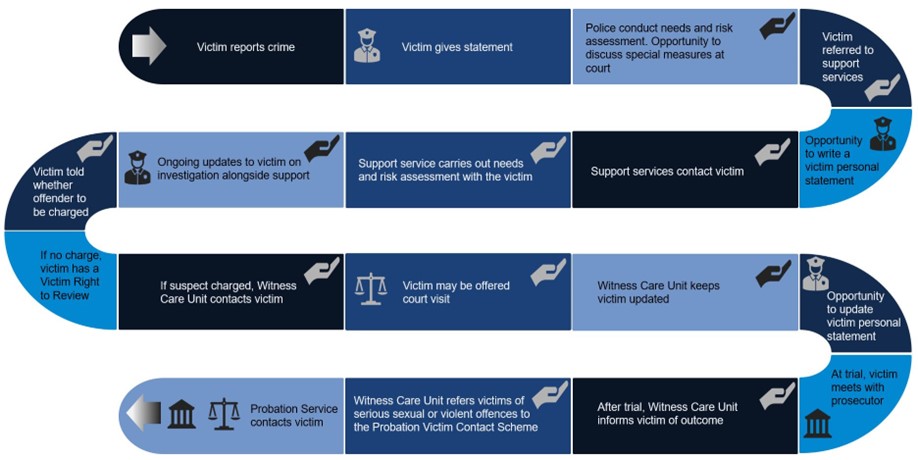
What to Expect When You’ve Reported the Crime to the Police
After you have reported the crime, the police tend to ask 4 main things;
- Who did this?
- What happened?
- Where did it happen?
- When did it happen?
It’s important to note that the police may have to ask you the same questions several times, but this isn’t because they don’t BELIEVE you, it might be that they just need to clarify a few things. So please don’t worry.
The police may then suggest that you have a forensic medical examination at the SARC (Sexual Assault Referral Centre)if they believe there to be be recent forensic evidence. But don’t worry, if you don’t want to have one thats perfectly fine because it’s entirely your decision.
After you have given your statement or VRI (video recorded interview), specially trained officers will work your case and one will be your point of contact. This officer will provide you with help, support and updates about the case. The police will also refer you to an ISVA who will provide you with specialised support throughout the process.
Once you have given your account of events, the police will decide if there’s enough evidence to charge the suspect or refer to the CPS so they can decide whether there’s enough evidence to charge them. If the police decide there’s not enough evidence to proceed they will CLOSE the investigation. It’s important to note that just because they’ve had to close the investigation it doesn’t mean that they DON’T BELIEVE YOU, it just might be that there simply isn’t enough evidence to go forward. If the police do decide to bring charges and they can identify the perpertrator, they will move to arrest them if they think it’s in the public interest.
Afterwards, it may feel like things have stopped progressing or have slowed down a bit, but i can assure you that this is because they will be building the strongest possible case. Don’t worry though, your specialized officer will still support you throughout the investigation and give you updates as and when they occur.
Statistics…
- The victim withdrew their support in 55% of rape cases: Due to the negative impact the process had on them.
- 37% of rape, sexual assault victims/survivors, 39% of stalking and harrassment victims are dissatisfied with court timeliness.
- Sexual assault victims/survivors are disproportionately affected by delays in the process.
- The perpertrators of sexual crimes are less likely to be remanded.
- Victims/Survivors credibility rather than the facts of the case?
- The Annual Victims Survey ’24’ found that fewer than 42% of the the people surveyed believed they could get justice, 46% were confident in the criminal justice systems effectiveness, and only 51% in it’s fairness.
- Only 14% of them were ‘aware of their right to challenge a decision to drop their case‘ (annual victim survey ’24’).
- The survey also found that 41% of sexual assault and rape victims/survivors did not report the incident.
- It found that ‘nearly 32% of Asians and Black victims did not report the crime compared to 21% White victims/survivors. The survey of ’24’ also revealed that 38% of 16-24 did not report the crime.
- Crown Court conviction rates for adult rape are reported around 54.4% to 63.4% for cases prosecuted by the CPS.
- Of the 71,227 rapes recorded in 2024 only 3 in 100 were charged.
The Annual Victims Survey ’24’ revealed that the perceptions of the police were nuanced….
- 43% of respondents felt that their case had been investigated properly.
- 40% of the people surveyed agreed that they were kept informed of the progression of the case.
- ‘only 27% of victims recalled being referred to specialist support services‘ (Annual Victim Survey ’24’).
- The survey found that 59% of victims/survivors entitled to ‘special measures’ had the option explained to them, whilst many others were advised against ‘using these measures to appear more convincing to a jury’ (Annual Victims Survey ’24’).
- 71% of victims/survivors agreed that the police treat them fairly and respectfully, compared to disabled victims/survivors who felt that the police did not take them seriously.
- Less than 43% were confident that the CPS (Crown Prosecution) could effectively prosecute the perpertrator.
- 20% were dissatisfied with the time it took to progress the case through the courts.
- 61 % agreed that the support they were offered was tailored to their needs.
- 53% of the respondents agreed that their contact with the aftercare support services helped with their recovery.
- Of the 4,901 sexual offences recorded by the poolice, only 21% of the perpertrators were charged.
- Some respondents reported feeling disrespected, unsupported and unheard by the CPS. Whilst others said they felt like another statistic.
I can’t lie, i was very sceptical about the police prior to the attack. I wasn’t sure if they’d believe me or take me seriously, but i have to say i was wrong. The specialized officer that had my case was brilliant from start to finish. He believed in me and my case, and encouraged and supported me throughout. The effort he put in to making sure i got justice was in everyway, heroic to me. He never gave up, even when the toughest of obstacles got in the way, and he worked tirelessly to make sure the perpertrator got convicted. The police really put some serious effort and man–hours into this case, and i can’t thank them enough. Their ability to relate to me and my emotional and psychological despair was nothing short of amazing. It was evident that there has been significant improvement in their training and understanding of domestic related incidents. I felt their kindness, and their empathy towards me, it really touched me and gave me the strength to continue with the prosecution (because there were so many times i felt like giving up and walking away from it).
One major apprehension for me was having to go through a trial, i was terrified to say the very least. But again, the CPS and witness care proved to be amazing with me and this case (they’re really not as scary as you would think 😂), they were very empathetic, understanding, and encouraging. They really believed the defendant needed convicting so that he couldn’t do this to anyone else. The witness care team were great too, they walked me through everything, like what to expect when attending court and the safety measures they could put in place for me. But i won’t and i can’t deny it, having to go through a trial is a very scary and daunting experience, the thought of it would make me tremble with fear. However, my ISVA (independent sexual violence advisor) was with me every step of the way, she listend to my worries, and held me when i cried, she believed in me and my inner strength, but overall she empowered me to be brave and bring this evil man to justice.
The most difficult thing i faced during the trial was the cross–examination by the defence. This is were i take issue! This is when i realised that the victim isn’t protected from blame or slander. This is when i realised that there are people out there that will defend the indefensible. It really was unbelievable to be told that it must have been my fault i was attacked, and that i must have done something to provoke him. Here he was, this suave guy in a wig and robe calling me a liar and making the narrative support the defendant. How dare he i thought to myself, does he not see the evidence before him, my broken and bruised body evident in the pictures. I was baffled and in complete shock. I think it’s absolutley disgusting that a victim of a seriously violent crime can be spoke to in the most derogratory of terms whilst depicting the defendant as some kind of saint because of his achievements at work and his families standing within the community. Something needs to change here…This ‘Victim Blaming‘ towards me, in addition to the countless questions and deep probing into my life and sexual history, was almost the ‘straw that broke the Camels back‘. It triggered so many mixed emotions…none of which were good. It made me want to give up.
So i do understand it when i hear of victims withdrawing from the process. Theres’s no point in us sugar–coating things, we’re here to be honest with each other, therefore, i will tell you honestly about my experience. Taking the stand was nerve–wrecking, not only because i was only a short distance from the person that tortured and raped me, and all that seperated us was a screen. Nope, it was a mixture of things….thoughts and conflicting feelings. I know this is going to sound crazy, but i still think i felt love for him. I would think to myself…he must be sorry, he must not have meant it. It was just complete confusion and disillusionment for me.
Sorry…i don’t mean to freak you out, i’m just been truthful. But, let me express to you just how important it is for you/us to keep going, and to keep fighting. We’re putting ourselves through this for VERY VERY good reasons, we’re doing it to protect other POTENTIAL victims, we’re doing it for the many unfortunate victims that never got/get to TELL their story, and we’re doing it for the JUSTICE that we undoubtedly DESERVE! So my friends, on those days were you feel like you can’t continue, take a breath, and remember the reasons why you’re doing this. YOU’VE GOT THIS!…WE’VE GOT THIS!👍
“Facing their rapist at trial is already one of the most difficult things a victim will ever have to do. The vast majority of these victims are brave women and girls who just want to be believed. The very least they should expect is to be demonised for their experiences or made a spectacle of in the court room“.
Alex-Davies-Jones
I have attached a Youtube video about the special measures that can be put in place for you during a trial.
I will leave you with a few questions;
Do you think a ‘gag–order‘ should be placed on the defendant and his relatives from start to finish of the criminal proceedings to prohibit the slander of victims/survivors?
Should the defence lawyer be prohibited from victim–blaming?
Why does the burden of proof rest on the prosecution? Shouldn’t it be the defendant that has the burden of proving their innocence?
Should evidence of the defendants violent past be submitted to the jury, especially when they’re accused of serious violence, and/or sexual offences?
In cases related to sexual violence, should the verdict of a trial be made by the presiding judge rather than 12 people (the jury) whom know nothing about the defendants or the plaintiffs character and/or their criminal background if any?
It would be great to hear about your thoughts and feelings on this topic?
“Experiencing rape or sexual violence should never be treated as ‘bad character’ or reduced someone’s sexual history. Yet for too long victims and survivors have been forced to navigate a system where poor treatment has become almost routine. This is simply unacceptable“.
Imkaan (a spokesperson or End Violence Against Women and Rape Crisis England & Wales)


Leave a Reply