You’re all my friends, well i hope that you’ll be one day. That’s the whole purpose of ‘YVM‘, it’s a community of friends sharing their stories, opinions, and advice with the collective aim of guiding and aiding each other through these darkest of times. Therefore, i must and will be truthful in all things. I won’t lie to you and tell you that what’s to follow will be easy. No, as a friend i will tell you that there are so many difficult challenges ahead, and that at times you may find yourself wanting to withdraw from the world and the reallity of what has happened to you. The point to be made is…that being the victim of any form of sexual violence is a very traumatising and possibly life–changing event, therefore, many interwoven and conflicting emotions are bound to surface. Whether it be fear, sadness, shame or depression, or all of the above, the victim will at some point, experience some form of psychological and emotional trauma in consequence of the attack/assault.
The Aftermath…
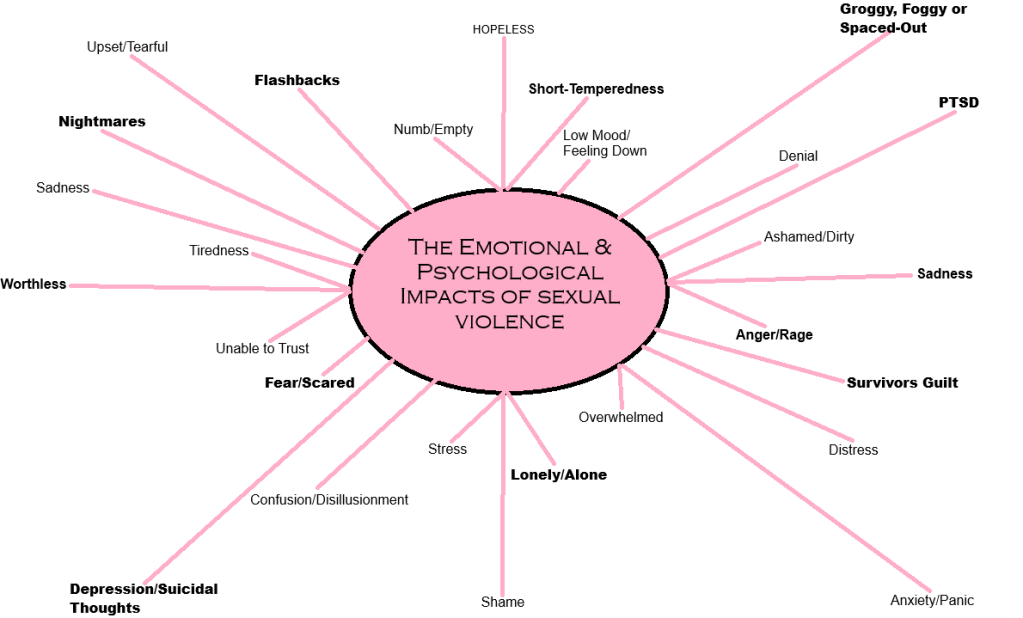
Self-Blame: Unfortunately, self-blame is a prevalant feeling amongst victims of sexual violence. They often find themselves questioning whether they did or said anything to instigate the attack, or whether they could have prevented it from happening (What did i say/do to provoke the attack? What could i have done differently to prevent the attack? etc.).
Shame: As awful as it is, shame seems to be a common feeling/emotion amongst people who have being the victim of child abuse, rape and other sexual related offences. My heart breaks when reading or listening to the testimonials of others, because they have no reason to be shameful or feel shamed. The shame and blame lies solely with the monster/s that dare to commit these atrocious crimes.
Denial: Is also common amongst victims/survivors of sexual violence and abuse. We often can’t accept it, or we don’t want to accept it. This could be because we have been harmed by a close family member, a close friend, or a partner or an ex-partner, or we use denial as a protective mechanism, we dissociate from the event because we can’t deal with the reality of what has happened to us.
Survivors Guilt: This is a feeling i’m greatly accustomed with, and is a very common feeling/thought for a lot of victims/survivors of sexual violence. I always, always, question why i didn’t die that day when so many other beautiful souls have lost their lives in the exact same situation i was in. It disturbs me almost daily. I question why i’m here, didn’t i deserve to die because of the wrongs i’ve done in my past? Why should i survive and not the young, loving mother of 2, who lost her life at the hands of her controlling and abusive husband. It’s not fair, and it haunts me greatly. This is something i am trying to work on though, i do know how lucky i am to be alive…and i have to believe that i survived for a reason, a greater purpose, and maybe that purpose is to share my story and encourage others to have the strength to come forward and report the crime/s. I don’t know, i suppose only time will tell eh? ❤️
Stockholm Syndrome: Although Stockholm Syndrome is not an actual diagnosis, the term is used when explaining the psychological bond often developed by a victim towards their captor or abuser. The victim may find/believe that showing affection towards their abuser might lead to less harm and/or kind treatment.
A victim might/be;
- Sympathetic towards their abuser.
- Empathetic towards their abuser.
- Develop feelings of love for their abuser.
- Protective.
- Affectionate or attached to the abuser.
- Rationalise the abuse.
- Attempt to help their abuser.
- Percieve basic dignity as kindness.
- Feel powerless.
- Distrust/Anger towards those trying to protect you/save you.
After leaving an abusive relationship, a person with Stockholm Syndrome might have;
- Feelings of emptiness
- Denial
- Social withdrawl
- Anxiety
- Depression
- Helplessness
- Excessive dependence
- Confusion
- Guilt
- Nightmares/Night Terrors
- Insomnia
- Flashbacks
- PTSD
- Startle easily
- Embarrassment about their feelings towards their abuser.
- Chronic feeling of tension.
- Loss of interest in activities.
What Comes Next?
No one of us are the same (except twins😁), and each victim/survivors experience/s of sexual violence will be different in some way, and the way each person copes with the aftermath of the event/s will differ too. Just remember that your pain and sorrow is valid, and that healing is a journey that takes time, effort and support.
Having experienced this type of violence myself, i can only emphasise about how difficult it was to process what had happened to me, and how unbareable i found the immediate aftermath. There were many, many days, were i found it difficult to get out of bed, and to be honest with you, i didn’t want to. I didn’t want to communicate with anyone, nor see anyone. This wasn’t simply because of ignorance….it was sheerly out of fear and panic. The thought of being in close contact with anyone was just unimaginable to me at the time. But there does become a point when we must leave our home, whether it be for interviews, physical examinations, or just the everyday grocery shop, sooner or later we have to take that plunge.
At first, the overwhelming feelings of dread, fear, and panic would literally debilitate me, at times i found it difficult to breathe, and i would tremble and collapse into a heap at my door. The immense FEAR really immobilises you. But… with the brilliant help, guidance, and advice from my ISVA (independant sexual violence advisor) and close family, i eventually started taking things step by step, and day by day.
Although it may not seem like it now, there are many things in place to help you/us recover emotionally, physically, and psychologically. Whether it be CBT (cognitive behavioural therapy), PTSD counselling, or physical therapy, there are many mechanisms in place to help us rebuild and guide us into recovery. This is an avenue i highly recommmend you utillise.
I can’t stress enough about how important it is to engage with the aftercare support services. If it wasn’t for my ISVA and engaging in therapy sessions, i can honestly say i would still be in the same psychological turmoil i was in up until recently. Don’t get me wrong, i’m still way–off being fully recovered, but the progress i’ve made mentally is great. It’s hard to believe it was only so many months ago i was a shaken, broken, mess. I would startle and jump at the slightest noise. I was in tears most days, slumped in a drunken haze…just trying to forget about what had happened to me. I wanted to hide away most days, and on others, i wanted to harm myself. I was in complete disillusionment, denial, and despair. I didn’t think for one minute i would be sat here now, talking with all of you and sharing my story. My point is, that the engagement i had with my ISVA ‘saved me‘ in so many ways, especially psychologically and emotionally, and i can honestly say without hesitation, that i wouldn‘t have made it through the year or the trial without mine.
The psychological and emotional impacts sexual violence has on a victim/survivor can be devastating, and it can, and probaly will, affect their psyche, behaviours, and emotions long after the event occured. But how do we navigate these complex emotions? Is there a right or wrong way to react, think, or feel, after being a victim of sexual violence? And how, if possible, do we recover from these traumas?
We will talk about healing on the How Do We Recover page. In the meantime, it would be great to hear other people’s view’s on this topic. Would anyone like to share their thoughts and/or experiences?
I have attached 2 of Youtube video’s about the impacts of sexual violence that you may find of interest.


Leave a Reply